
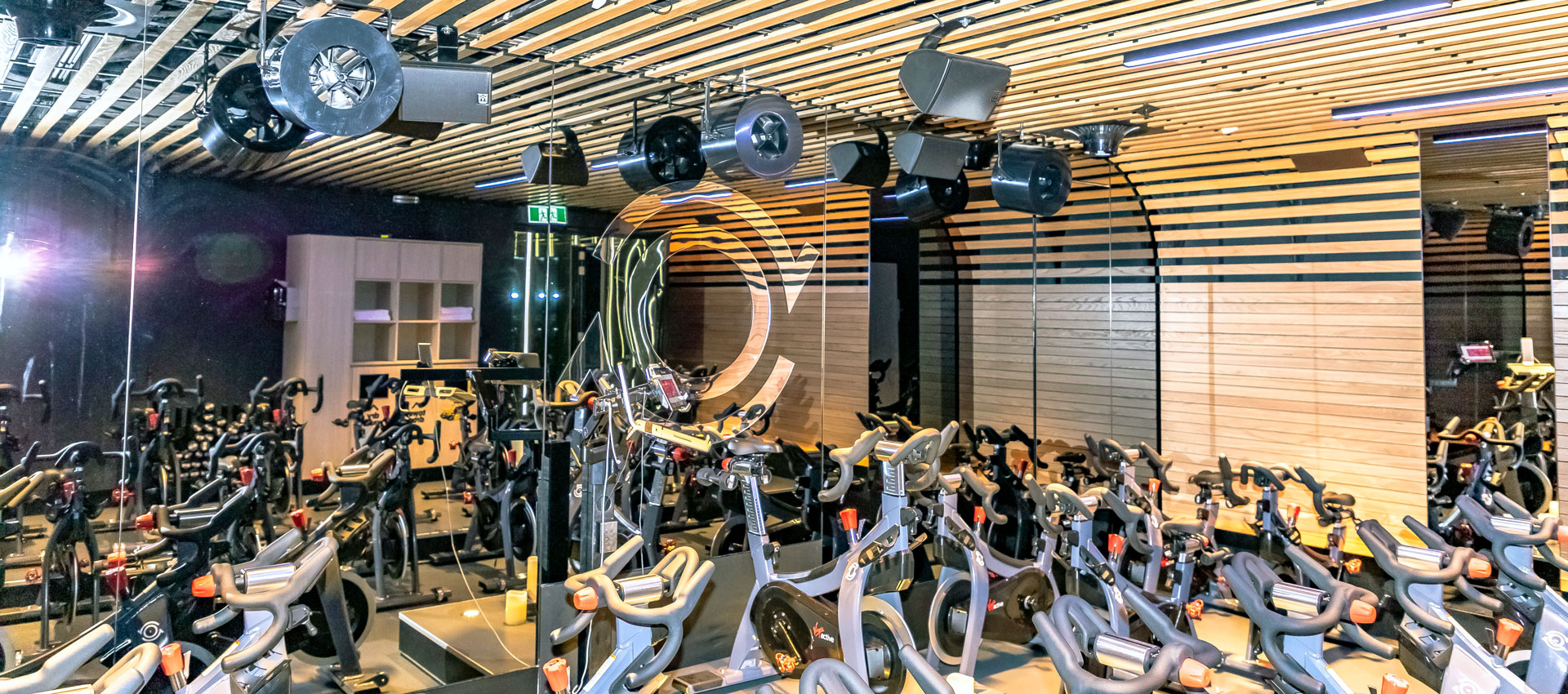
Cooling Buildings Without Air Conditioning: The Science of Airflow
Airflow Cooling: Find out what the science says.
Airflow Cooling: Find out what the science says.
I recently had an architect ask me if directional airflow cooling could improve comfort without air conditioning at one of my presentations and it’s a question I get asked often.
Of course, the answer is not a simple “yes” or “no” as thermal comfort is a very complicated and subjective science. Comfort regulation, including airflow cooling, relies upon more than just a stable temperature.
There is a basic understanding of thermal comfort; for example: you get hot when you run and if you are wearing inappropriate clothing like a feather down jacket when running in summer, you’ll feel really hot and sweaty and probably eventually overheat and feel like collapsing or being sick. So, we all get that bit.
But more recent thermal comfort research identifies a lot of psychological and physiological components of thermal comfort that we don’t usually consider, including airflow cooling.
Understanding thermal comfort
There is the psychology around expectation, like: did you grow up in an air-conditioned house so your expectation of comfort is different to someone who didn’t?
Or do you have a car that has split temperature controls to suit different preferences in the one space? That’s a small nod to the concept that people have a personal, subjective comfort experience.
Imagine if we had special zones in our homes or offices to accommodate those who find a certain range of comfort stimuli cool and others find the same stimuli warm. That may go some way to fixing the continual complaints about comfort found in most buildings. But that’s not really possible. You can’t, for example, offer everyone their own air conditioning outlet with their own climate control per outlet, unless you have a lot of money to spare. It’s simply not practical.
Alternatively, the most recent studies detail the concept of asymmetrical ranges of comfort in buildings where we offer dynamic, ever‑changing interior conditions. Occupant health is maximised by creating physiological changes in the body as it transits through a variance of conditions, either solely or combined, in adjacent spaces.
Can Directional Airflow Replace Air Conditioning?
But if we go back to the initial question,
Can directional air circulation make building users comfortable in summer without air conditioning?
When air conditioning is expected
If you or your building users are expecting the typical static air‑conditioned outcome of 22.5 °C and 300 lux lighting levels (the “bank vault” design) for eternity (as most buildings are), then if you don’t provide air conditioning, those building inhabitants probably won’t feel comfortable unless there is air conditioning.
Comfort without air conditioning
However, if you are not wedded to an air‑conditioned outcome, using a range of more traditional, yet effective solutions as found across the tropical and sub‑tropical or hot and dry worlds, then thermal comfort in summer in a building can still be significantly improved without the use of air conditioning, by simply moving air around and increasing levels of airflow cooling. This also avoids the energy costs and ongoing maintenance bills.
Building design and detailing, along with appropriate clothing and activities, as well as local climate knowledge, will all work together if properly coordinated to optimise your comfort in these warm environments.
Adding air movement, however, is going to offer one of the cheapest, most effective and fastest ways to cool people in your buildings. This works by the air movement evaporating perspiration from the skin, creating rapid cooling.
The ability to control where the air goes, if required, rather than just “willy‑nilly” around the fan blades, increases the value and versatility of air movement as it increases the building designer’s or engineer’s options. Hence the question includes the word “directional”.
Research on airflow and comfort
Professor Richard Aynsley, ex‑Professor of Tropical Architecture at James Cook University and a member of the ASHRAE thermal comfort group, has undertaken a large amount of research on air movement and thermal comfort in summer.
His chart (besides highlighting the energy savings found when using air movement for cooling rather than air conditioning) details quite clearly the value of air movement in very hot temperatures, significantly increasing levels of comfort.
His research indicates that an air speed of 3 m/s at 35 °C will make you feel (SET) 6–7 °C cooler.
Percentage of People Dissatisfied (PPD)
There is also a large amount of research by thermal comfort academics such as Professor Richard de Dear, and general air conditioning design parameters, indicating that you will end up with the same level of people uncomfortable (or inversely, comfortable) in an air‑conditioned building as in a naturally ventilated building (subject to a range of parameters like personal control, etc.). This is known as the PPD (Percentage of People Dissatisfied), and for both air‑conditioned and naturally ventilated buildings, the levels are around 15–20 %. The aim of engineers is to achieve around 10 %, but usually it ends up around 15–20 %.
It is impossible to always make everyone comfortable in a building, no matter what you do; it’s simply too subjective.
Percentage People Dissatisfied: An index that predicts the percentage of occupants expressing dissatisfaction with the room thermal environment. ASHRAE 55‑2004 specifies the combination of indoor space environment and personal factors that will produce thermal environment conditions acceptable to 80 % or more of the occupants within a space.
Now, what does that say about the value of air conditioning design in creating comfort?
So, can airflow cooling replace AC?
As we consider the initial question, the answer really boils down to a range of personal preferences. If you want air conditioning and the related costs that go with it, then air movement in summer won’t offer any significant comfort for you. Your expectation will be centred around the default 22.5 °C outcome that people assume is comfortable for everybody.
But if you are open to not using air conditioning for whatever reason—including not wanting the expense of buying or running it—or understand that thermal comfort is a subjective and personal area and realise that just because a space is air‑conditioned doesn’t mean it is comfortable, or you simply want a low‑carbon, thermally comfortable outcome, then airflow cooling through air movement or circulation has been proven to provide thermal comfort across the broad range of Australian and even warmer, drier or more humid climates.
Evidence from naturally ventilated buildings
If we look at the latest comfort research around naturally ventilated buildings, the ASHRAE chart highlights that in warm climates, around 15–20 % of the building’s inhabitants were uncomfortable. As per the ASHRAE definition above of PPD, that’s a similar PPD to air‑conditioned buildings – at a much lower cost.
For engineers, ASHRAE also details the cooling value of air movement in warm Sydney climates.
Find out more about airflow cooling
If you want to find out more about airflow cooling, or simply how Airius fans are now delivering thermal comfort to a range of customers in all types of non‑conditioned (or improving it in conditioned spaces too) buildings in the tropics, hot and humid or even temperate zones in Australia, contact us today!